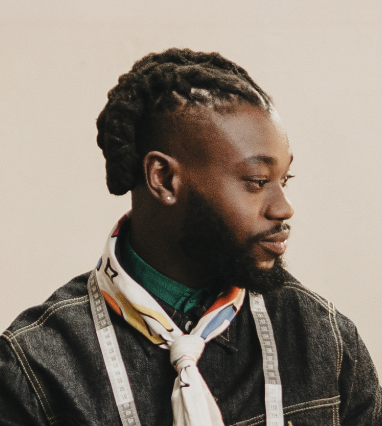
SONOS CLUB : CHICKIE
London-based Chickie has an infatuation for the rebellious core of techno music, peppering early Detroit sounds with spooky vocals and rogue melodies, evoking the addictive rhythms of transnational nightlife.
INTERVIEW
How would you describe the emotions or energy you try to bring to your sets?
CHICKIE: I try and bring that feeling of real-time discovery to my sets and immerse people into that journey with a lot of repetitive sounds and motifs. That way, subtle hooks and rhythms to take on new significance. I love dancing a lot so always try and think about how your body might respond.
Are there any particular artists, cultures, or experiences that have shaped your musical identity?
CHICKIE: I am half Senegalese so drumming was almost a constant sonic backdrop to my brain forming. There’s the talking drum which is used to transmit messages through changes in pitch and rhythm, and my dad used to play the djembe. I think that’s really influenced the way my body tunes into ambient noise and ambient rhythm, meaning DJing and dancing for me has always been about both immersion and communication at once.
Beyond that I grew up in a very rural part of England, which sometimes felt as if there was no dance music culture at all, let alone a Black or African one. That isolation drew me quite intuitively to seek out house, techno and garage from artists in London and the US as I got exposed to the internet.
What’s your approach to curating a mix — do you follow a structure, or is it more instinctive?
CHICKIE: My technical approach has shifted over time. I used to wing it a lot but what I’ve experienced is that if I’m not a bit spiritually aligned with what’s happening in the rest of my life it is very difficult to do creative work that I feel good about. If I get there, then the next challenge is to have the discipline to follow it through. Prep usually requires a lot of listening, practicing and setting aside time – which can be easier said than done for me – but it’s worth it!
How do you balance playing what you love versus what the crowd expects?
CHICKIE:Preparation is important, but I always try and get a feel for the physical space and tune in to my mood and everyone else’s, which can be less predictable. I prefer to play at parties and events where the interest and curiosity of the crowd might be a bit similar to mine, then we’re all invested in what each other wants to hear. If it’s not like that then it can be more difficult to tune in and grapple with that age-old DJ’s dilemma.
Is there a particular genre or sound you’re currently exploring or excited about?
CHICKIE: I really like polyrhythmic techno at the moment, there’s some great stuff coming from Uganda and Congo, it’s very visceral and I am trying to learn how to mix it as it doesn’t follow the typical 4/4 time structure of most Western electronic music. Also early garage from the US as it seeped into the UK always gets me in the feels and makes me antsy to dance; I’m enjoying a lot of that lately as the sun’s starting to come out.
The music industry can be intense. How do you take care of your mental and emotional well-being?
CHICKIE: Being part of Sisu has been massive as we can share our struggles and offer each other support. We’ve worked through some huge challenges together and made an impact in ways that we wouldn’t have been able to on our own. It’s so important for solo artists to still feel like you have a bit of power and coming together with others can ease that exhausting feeling you can sometimes get of swimming against the tide.
What keeps you inspired and motivated when you hit creative or personal challenges
CHICKIE: You can never always be in full on mega production mode. Rest and resetting for me usually involves taking the pressure off on the output and taking in others’ art instead. Sometimes discovery translates into new ideas, other times it just allows you to rest and feel better.
Beyond music, how do you see yourself in the world—what drives you and your purpose?
CHICKIE: When making decisions I often think of my two grannies, Awa and Diana, and the different lives we’ve lived but also struggles we have shared. That helps put my place in the world into perspective. I think having a grasp on history and those who came before you is one of the most important things humans can do – we are seeing that the absence of that can be catastrophic. I take pleasure in learning more every day.
Have you faced any challenges in the industry that shaped the way you approach your craft?
CHICKIE: I’ve definitely struggled with self-esteem and putting myself out there. Confidence is the thing that allows you to work with others to create something better for yourself and those you care about. Understanding how you fit into a bigger system helps, because we are living in weird times, so learning to think about yourself as less exceptional, and more valuable is important to not let bad vibes get under your skin.
How do you navigate spaces where you might feel underrepresented or overlooked
CHICKIE: Navigate my way to the DOOR !!!
If you could create your dream lineup for an event, who would be on it?
CHICKIE: Youssou Ndour, Everything But the Girl, Ms Dynamite and Dean Blunt headliners and Tim Reaper, Aaron Carl (RIP), Nkisi for the afters.
What’s a festival, venue, or city you dream of performing at and why?
CHICKIE: Put me in one of those long all day block parties in new york city with the auntys dancing in the sun and people coming and going, that would do me just fine!
SONOS CLUB is an initiative from Sounds of Craft Records, designed to highlight the eclectic electronic music scene through the perspectives of the BIPOC diaspora and marginalized communities, while being open to all.