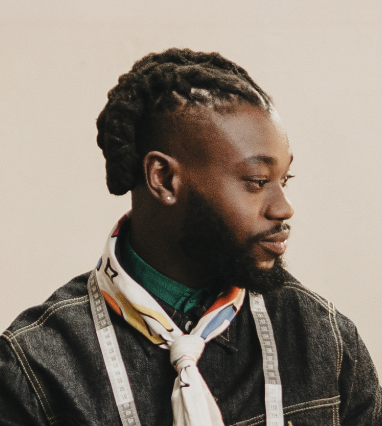
Seksu is an Algerian DJ from London, whose creative and curated mixes are renowned for fusing iconic club tracks with anthems from across the SWANA region (South West Asia and North Africa).
Seksu’s sets have featured at Soho House, Laylit, Yalla Party, ILL-3AB, and Body Movements festival. He’s opened for notable artists like Bashar Murad, 47Soul, and Cindy BB, appearing in sets from Cyprus to Germany. His performances have also landed him speaking engagements on the Reclaiming the Rave panel hosted by BBG in Brighton, and radio shows like Cashmere Radio and Voices Radio (as part of the Nafs takeover).
His work at Pride of Arabia and Pxssypalace inspired him to found Bledi - a grassroots queer SWANA space and club night. Bledi is dedicated to celebrating artists of colour, empowering the most marginalised, and giving back to the communities that most need it, by raising awareness and fundraising.
INTERVIEW
What first drew you to DJing, and how has your sound evolved over time?
SEKSU: I learned to DJ with the Pxssypalace workshops and the experience of learning to DJ blew my mind. I feel like I took to it well but over time I’ve definitely refined my sound with more intention. The energy and intent of a specific event will influence my sound, but I have certainly become known for my blends of Arabic classics with club anthems.
How would you describe the emotions or energy you try to bring to your sets?
Are there any particular artists, cultures, or experiences that have shaped your musical identity?
SEKSU: am influenced by everything, my entire life experience aurally flows through my sets. Those who know, know, and those who don’t, will learn a little more about me with each gig. I love to learn from other DJs and musicians, most recently I have been so blessed to share stages with Nadine Noor, Saliah, and Hiba Salameh. I also love to teach people how to DJ, those friends I’ve taught have then gone on to teach me something new that I’ll go on to implement in my music.
What’s your approach to curating a mix—do you follow a structure, or is it more instinctive?
SEKSU: My sets will usually build tempo gradually but honestly I thrive off the audience response. I have always been an instinctive DJ, which I reckon is the best way forward. One thing that always drew me to DJ was that I would lose myself in the flow of the music, and I find that if I was to structure my sets it would kill that flow. It really helps to be adaptable when shit goes wrong as well.
How do you balance playing what you love versus what the crowd expects?
SEKSU: I don’t know what the crowd expects for me specifically, but I will try to assess the dancefloor now and again, to make sure we’re on the same page. I love to throw curveballs in sometimes to keep everyone on their toes and introduce them to genres they wouldn’t have expected.
Is there a particular genre or sound you’re currently exploring or excited about?
SEKSU: I recently returned from Paris for Fête de la Musique, and so I’ve been introduced to some new Francophone pop and French Caribbean music. I was introduced to LinLin and Ino Casablanca’s new albums, both of which got me super excited with their afro-diasporic rhythms.
The music industry can be intense. How do you take care of your mental and emotional well-being?
SEKSU: Life is intense, frankly. I take care of my physical health which helps with the mental, and I am quite stringent with my schedule. I do put a lot of effort into organising my life with a calendar and to-do list, but I am grateful to my past self when he helps me navigate things. I have also recently been put in the privileged position of having access to a therapist. Therapy has been life-changing, and I wish it for everyone.
What keeps you inspired and motivated when you hit creative or personal challenges?
SEKSU: Honestly, I like to think of my younger self who would be so proud of how much I have now accomplished and how far I have come. It helps that I pray as well, that time to disconnect from the material world and remind myself of the transcendental nature of the cosmos is so precious. We are so small at the end of the day, and it helps to remember that.
Beyond music, how do you see yourself in the world—what drives you and your purpose?
SEKSU: I feel like I’m in a unique position socially, and I work to try to be the kind of person that my childhood self needed. It’s the reason I formed Bledi (my club night showcasing queer Arab/SWANA talent), and when someone shows appreciation for the work I’ve put into it, it truly warms my heart.With my mixes and Bledi, I think my purpose is to curate a safer space for those who don’t have one.
Have you faced any challenges in the industry that shaped the way you approach your craft?
SEKSU: God yes, I know for sure I’ve been overlooked for certain opportunities based on my presentation and identity. It is upsetting but it fuels me to work on my own projects and work with people who have similar visions.
Do you think electronic music is becoming more inclusive? What progress do you hope to see?
SEKSU: I would love to see more solidarity between marginalised groups and their non-marginalised counterparts. I do see more inclusive collectives and nights out that centre or uplift marginalised groups, but it is still a niche. The mainstream electronic scene is lacking in diversity.
How do you navigate spaces where you might feel underrepresented or overlooked?
SEKSU: With my own club night, I enforce a level of affirmative action, booking almost exclusively queer and trans DJs of colour, and setting tickets with a QTIBPOC (Queer/Trans/Intersex, Black, and People of Colour) tier and Ally tier. The allies pay a slightly higher fee, which explicitly weeds out people who would seek to do harm to marginalised minority groups at the event.
What’s a festival, venue, or city you dream of performing at and why?
SEKSU: I would love to play at so many festivals and cities, it’s hard to decide. I think one place that would mean the most to me would be to play in Algeria. Other than that, Adira party in Berlin would be amazing, and Waifu party in Tokyo.
SONOS CLUB is an initiative from Sounds of Craft Records, designed to highlight the eclectic electronic music scene through the perspectives of the BIPOC diaspora and marginalized communities, while being open to all.